Adversarial AI · Automation detection · Synthetic media
James Verbus
I build and evaluate AI systems for messy, adversarial environments.
Recent work spans bot and automation detection, anomaly detection, sequence modeling, synthetic media, and AI productivity.
Start here
Representative work
Technical case study
Extended Isolation Forest for Spark/Scala anomaly detection
Distributed anomaly detection with random hyperplane splits, validation plots, benchmarks, and reference parity checks.
Research
Finding AI-generated faces in the wild
CVPR workshop research and a LinkedIn Engineering writeup on synthetic profile-image detection at platform scale.
Workshop
Reinforcement learning for orbital transfers
A Brown AI Winter School workshop on orbital mechanics, PPO agents, and practical model diagnostics.
Open source
LinkedIn's isolation-forest library
Distributed Spark/Scala anomaly detection with Extended Isolation Forest and ONNX support.
Background
Detection work across trust, AI, and physics
At LinkedIn, most recently as a Senior Staff Machine Learning Engineer, I built production systems for Trust: bot and automation detection, deep models over member-activity sequences, unsupervised anomaly detection at scale, and detection of AI-generated profile images. I also created and open-sourced LinkedIn's isolation-forest library and led AI productivity work for Trust engineering teams.
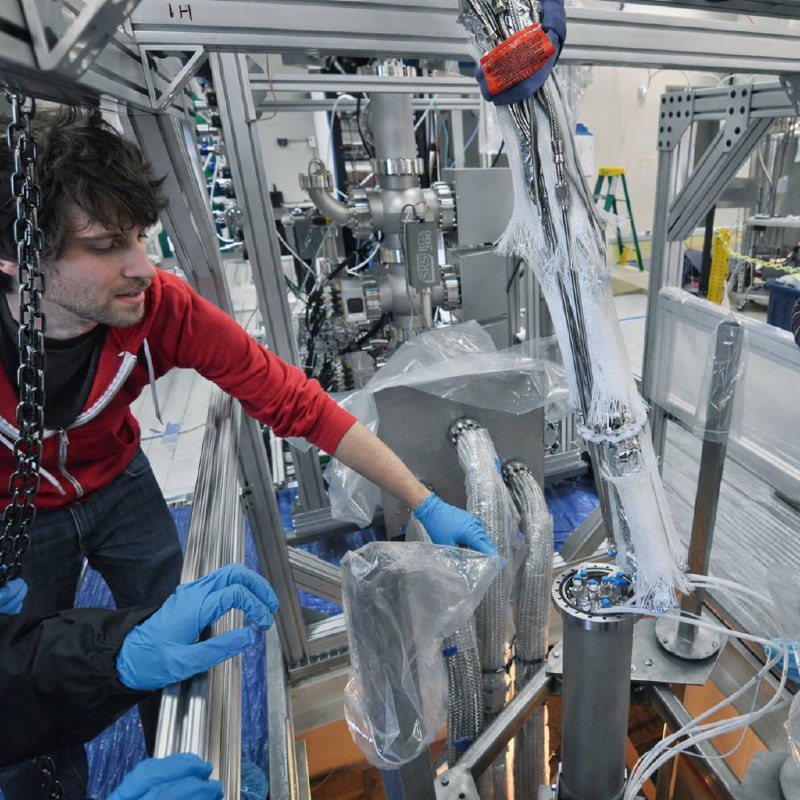
Before LinkedIn, I earned my Ph.D. in physics at Brown working on LUX, one of the world's most sensitive dark-matter detectors. The common thread is practical measurement: extracting weak signals from noisy data, checking uncertainty, and making systems useful when ground truth is incomplete.
Featured Writing
Open Source
Extended Isolation Forest for Distributed Spark/Scala Anomaly Detection
Extended Isolation Forest support for linkedin/isolation-forest, with random hyperplane splits, validation plots, benchmarks, reference parity checks, and edge-case tests.
Research
Finding AI-Generated Faces in the Wild
Research and engineering work on detecting AI-generated profile images in real-world settings, including CVPR workshop publication and LinkedIn Engineering write-up.
Workshop
Reinforcement Learning for Orbital Transfers
A hands-on Brown AI Winter School workshop connecting orbital mechanics, reinforcement learning, PPO agents, and practical model diagnostics.
Ph.D. Thesis
Calibrating the LUX Dark Matter Experiment
An absolute calibration of sub-keV nuclear recoils in the LUX detector using neutron scattering kinematics, improving low-mass WIMP sensitivity sevenfold.
Projects
Open Source
Isolation Forest
A distributed Spark/Scala isolation forest library for unsupervised anomaly detection, built at LinkedIn and open sourced. Recent major updates added Extended Isolation Forest and ONNX support.
Research / Publications
2024
Finding AI-Generated Faces in the Wild
G.J. Aniano Porcile, J. Gindi, S. Mundra, J.R. Verbus, H. Farid
CVPR Workshop on Media Forensics
Paper ·
arXiv:2311.08577
2023
Exposing GAN-Generated Profile Photos from Compact Embeddings
S. Mundra, G.J. Aniano Porcile, S. Marvaniya, J.R. Verbus, H. Farid
CVPR Workshop on Media Forensics
Paper
2024
Deep Learning to Detect Abusive Sequences of User Activity in Online Network
J.R. Verbus, B. Wang
US Patent 11,936,682
Patent
Talks / Videos
2025
Brown AI Winter School 2025: Exploring LLMs and RAG
A 2.5 hour interactive workshop at the 2025 AI Winter School, hosted by the Center for the Fundamental Physics of the Universe at Brown University.
AI Winter School 2025, Center for the Fundamental Physics of the Universe at Brown University.
2024
SXSW 2024 Panel with DARPA: Real or Not - Defending Authenticity in a Digital World
A panel discussion on authenticity, trust, and detecting synthetic media in an AI-native information ecosystem.
SXSW and DARPA.
DARPA recap
2019
Fighting Abuse @Scale: Preventing Abuse Using Unsupervised Learning
Detection of abusive activity on a large social network is an adversarial challenge with quickly evolving behavior patterns and imperfect ground truth labels. These characteristics limit the use of supervised learning techniques, but they can be overcome using unsupervised methods. To address these challenges, we created a Scala/Spark implementation of the isolation forest unsupervised outlier detection algorithm.
@Scale Conference.
github.com/linkedin/isolation-forest ·
Original @Scale page
Contact
I like hearing from people working on AI systems, detection, synthetic media, sequence modeling, physics, or AI productivity. Email is the easiest way to reach me.